
Transforming an operational pain into a new growth lever
Initiated and launched a self-serve end-of-term flow that reduced operational workload by 70% and uplifting retention.
Scope
- Co-initiated the project with PMM and secured leadership buy-ins
- Led discovery with customers and operations to map pain points and motivations
- Designed an end-to-end experience
- Collaborated with Ops, Engineering, and Sales to align process and triggers
Strategic impact
- From a 100% manual workflow to a self-serve flow
- Reduced operational effort by 70%
- Increased “keep renting” selections, driving revenue growth
- Improved customer transparency and trust
The opportunity
Getting ahead of growing inefficiencies
As topi’s customer grew, we had more device rentals reaching end-of-term. Every rental return or renewal required email chains between customers, Operations (of 2 people), and Sales. It was time-consuming and error-prone. Moreover, we were missing out opportunities to increase retention and revenue.
High operational overhead
Ops handled 100% of renewals manually - tracking expirations, sending reminders, presenting end-of-term options and its cost, and handling renewal/return.
Poor customer experience
End customers lacked visibility into contract status, possible options and its cost. Overall experience was heavy, long and opaque.
Missed business opportunities
Without a structure flow, topi couldn’t nudge customers toward higher-value outcomes like keep renting or upgrading devices.
Approach
Grounding design in real customer and business needs
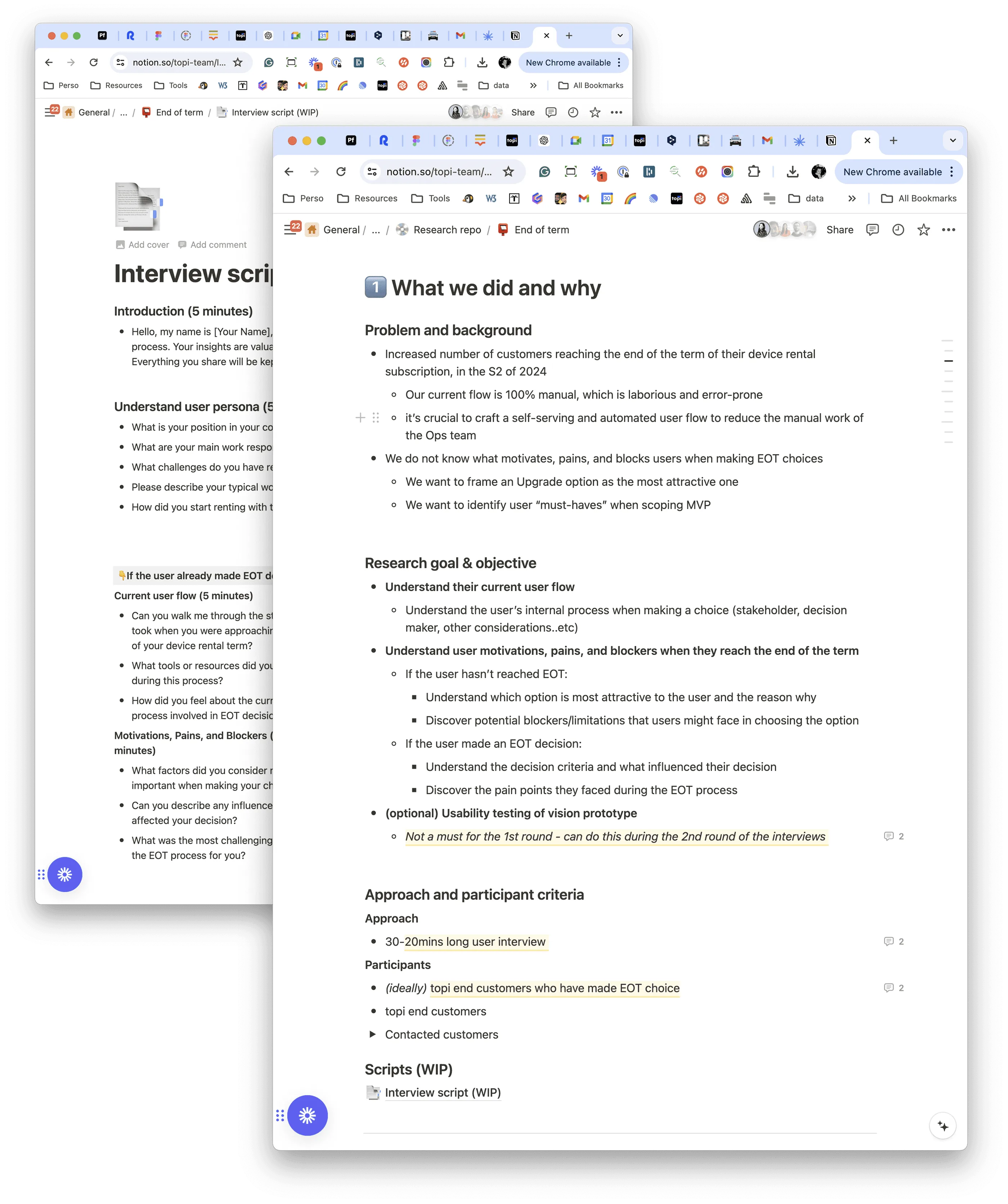
The project wasn’t on the roadmap. It started as a PMM and design-led initiative. We began by validating our hypothesis through qualitative research to understand how customers made end-of-term decisions.
Research goals
- Map current end-of-term workflows.
- Identify motivations, blockers, and decision criteria.
- Test framing and timing that influence renewal behavior.
Methods
20–30 minute interviews with customers who had recently reached end-of-term. Synthesis workshops with Ops and Sales to align on system and communication gaps.
Key insights
Customers needed visibility, ops needed their time freed
We identified three main friction points from discovery. These validated our hypothesis and served as strong evidence to secure leadership buy-in.
Customer wanted a full visibility
They wanted clear, complete information on all rental options. They needed everything in one place to consider and compare before committing.
Manual email communication → friction & error prone
Ops spent hours on coordination and reminders. And customers often missed emails. It caused delays and confusion in EOT decisions.
Customer needed flexibility and control
We only contacted customers near term-end, but research showed that end-of-term decisions don’t always align with contract dates. We do offer this option, but it wasn’t available for the customers.
Solution
Turning a hidden workflow into a transparent self-serve experience
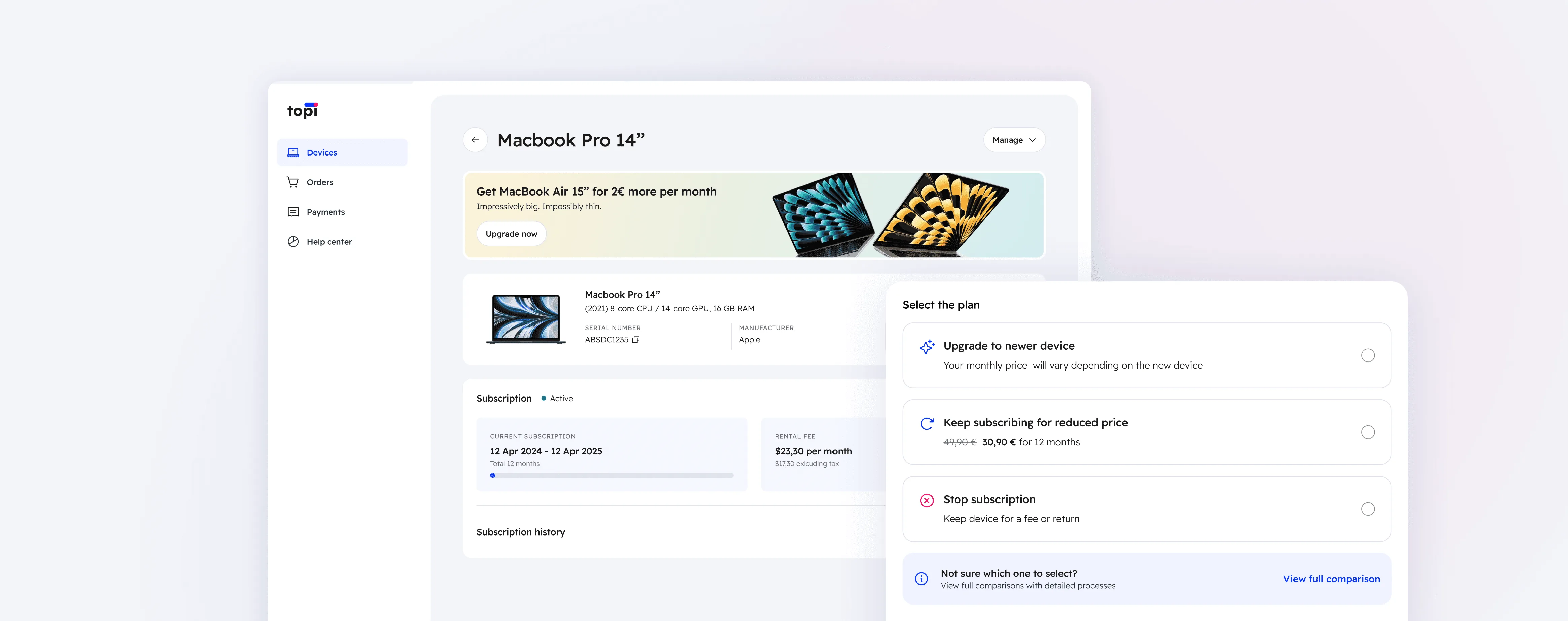
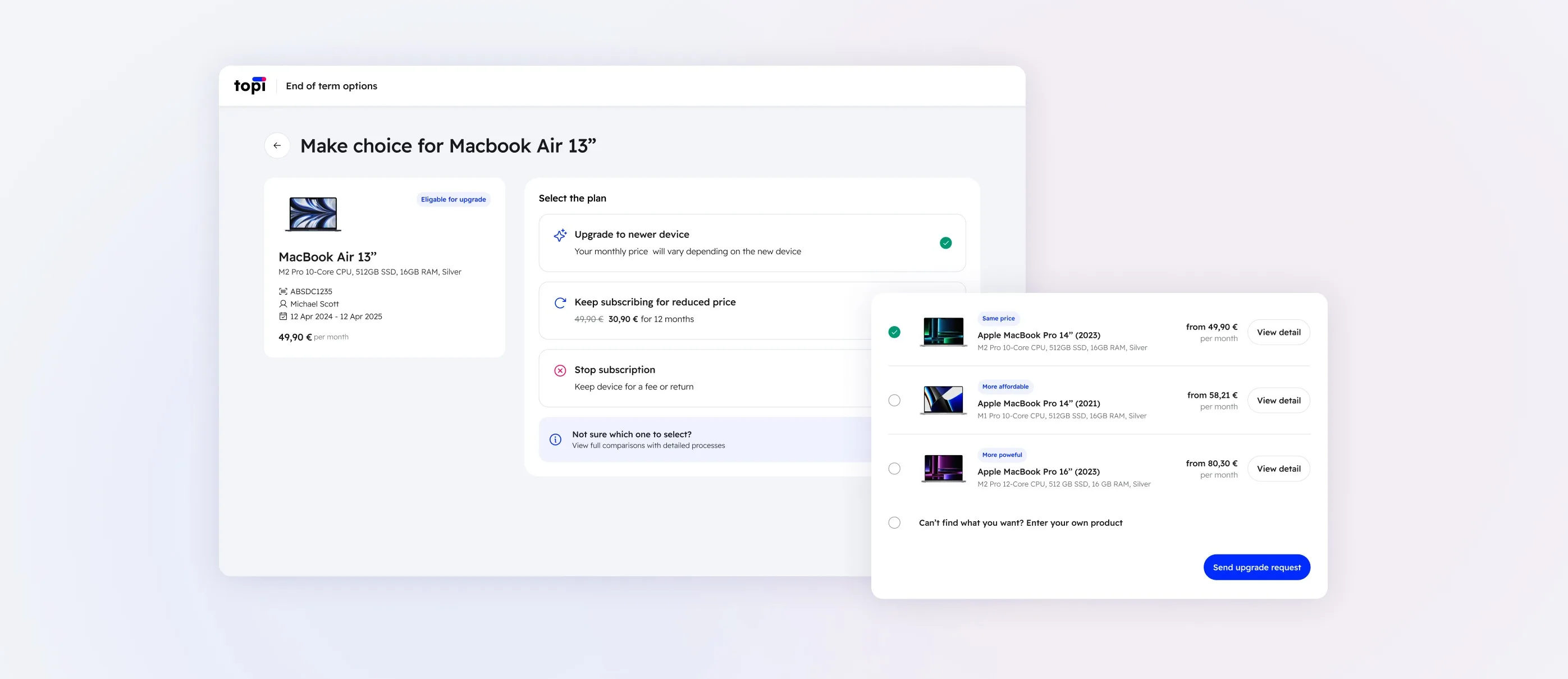
We designed a new end-of-term experience within the customer portal. It surfaces upcoming term expirations and gives users clear, guided choices.
1️⃣ Educating customers in the checkout flow
Problem
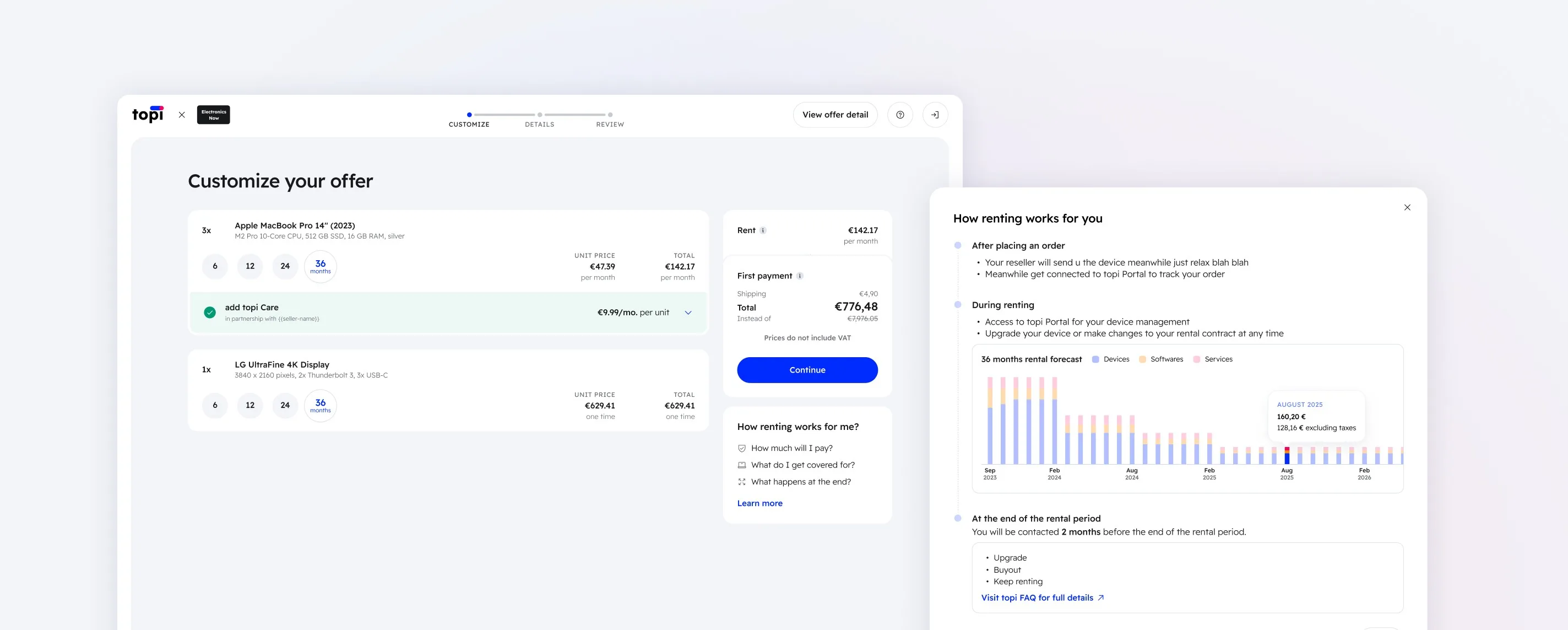
Customers globally lacked understanding on how rental tenures worked, or what types of options are available at the end of the term. This led to confusion and missed retention opportunities.
Solution
We introduced an educational information directly in the checkout flow. By visually explaining rental periods, payments, and end-of-term options before checkout, customers gained clarity.
2️⃣ Context aware trigger for upgrades and end-of-term decisions
Problem
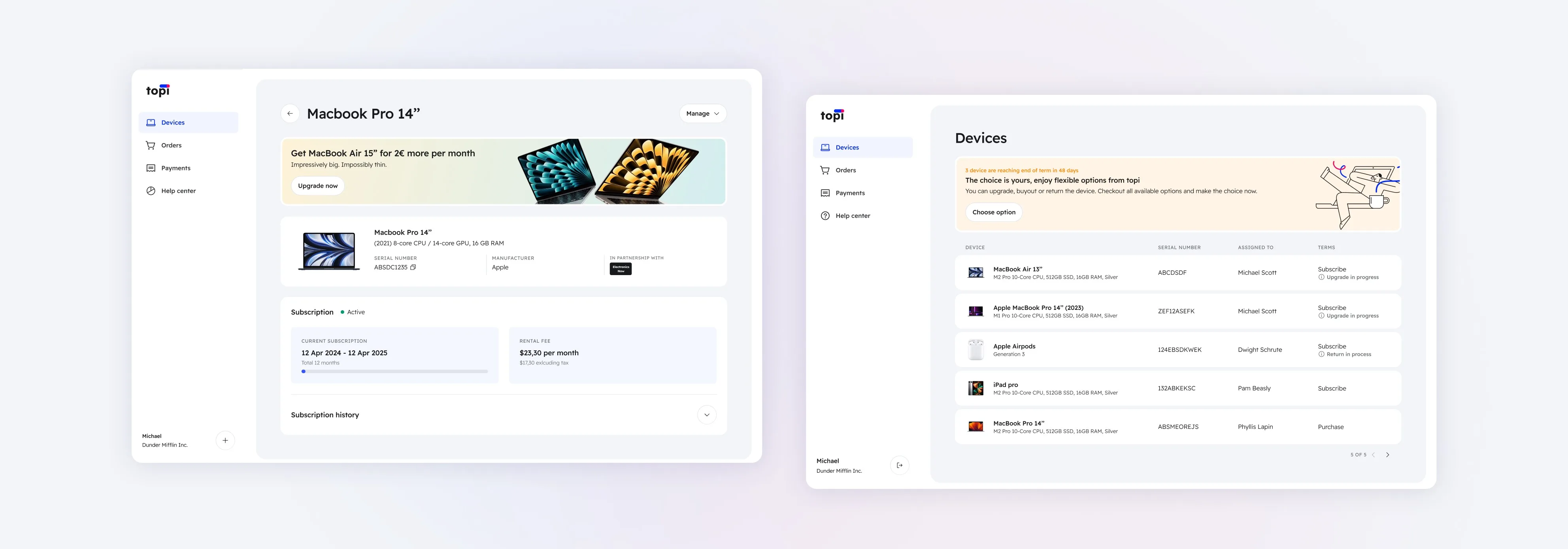
Users didn’t know when they were nearing end-of-term or what actions they needed to take.
Solution
We introduced two smart, timing-based triggers. Before end-of-term, users see a proactive upgrade offer tied to new product launches. It created an upsell and early upgrade opportunities. At end-of term, a clear banner prompts users to choose their rental option. It frees Ops from manually tracking and creating email chains.
3️⃣ Transparent upgrade flow with built-in upsell opportunities
Problem
End-of-term options were unclear as it was entirely manual. Customers didn’t understand their choices, and topi missed chances to retain users or upsell services.
Solution
We designed a transparent flow by presenting all rental options upfront, with clear pricing. We also introduced contextual upsells, such as certified data wipe, easy return, and accessories, turning end-of-term moment into a growth opportunity.
Outcome and impact
Pain to measurable growth
- 70% reduction in operational overhead based on Ops team estimation (Removing the initial stage of manual flow - tracking, email intervention and communications)
- Increase in customers choosing “keep renting” option.
- Higher transparency → improved user trust and satisfaction.
Reflections
What I learned
✨ What worked
- Securing leadership buy-in: We persuaded the founders to prioritize the project by framing it around operational efficiency and revenue impact.
- Cross-functional alignment between Ops, PMM, and Engineering: It turned a side initiative into a company-wide process improvement.
🪄 What I'd do differently
- Continuous feedback loop post-launch: instead of one-time interviews, I’d set up a continuous discovery cadence to track retention and satisfaction over time.